
How Often Should You Clean Your Ears?
Most ears do not need routine cleaning. Earwax is not dirt. It is made on purpose, and the ear canal is built to move it out.
That is the short answer to how often should you clean your ears. For most people, the answer is not on a schedule at all. Wash the outside of the ear with a washcloth. Leave the canal alone unless there is a clear problem.

Why earwax is there in the first place
Earwax, also called cerumen, has a job. It helps protect the ear canal. It traps dust, skin flakes, and small particles. It also helps keep the canal from getting too dry.
The ear canal is not a straight tube that needs regular scraping. It is lined with skin that slowly moves outward. Jaw motion from talking and chewing helps this process. Over time, wax normally works its way toward the opening of the ear. Then it dries, flakes, or wipes away from the outer ear.
That is why many people never need earwax removal at home beyond normal bathing. The system already has a cleanup process.
The American Academy of Otolaryngology Head and Neck Surgery clinical practice guideline on cerumen impaction supports this basic approach. The guideline does not recommend routine ear canal cleaning for people without symptoms. It also warns against putting objects into the ear canal. The guideline is available here: Clinical Practice Guideline on Cerumen Impaction.
Why most ear cleaning at home makes wax worse
Many people clean their ears because they feel wax must be removed before it causes a blockage. The problem is that the most common tools do the opposite.
Cotton swabs usually push wax deeper
Cotton swabs may remove a little wax from the outer opening. Inside the canal, they often push wax deeper. Repeated use can pack wax against the eardrum. That can turn soft wax into a firm plug.
This is the main problem with cotton swabs ear cleaning. The swab fits into the canal, but there is nowhere for the wax to go except inward. Over time, the wax can build up in the deeper part of the canal, where the ear cannot move it out as easily.
Cotton swabs can also irritate the canal skin. Scratched or inflamed skin may feel itchy, which leads to more swab use. That cycle can keep the problem going.
A safe rule is simple. Cotton swabs are for the outside folds of the ear, not the ear canal.

Ear candling does not remove earwax
Ear candling has been promoted as a way to pull wax out with heat or suction. It does not work that way. The material seen inside the candle is usually candle residue, not wax pulled from deep in the ear.
Ear candling safety is also a real concern. The flame and hot wax can burn the ear, face, hair, or canal. It can also leave candle wax in the ear. In serious cases, it can injure the eardrum.
There is no good reason to use an open flame near the ear canal for wax.
Ear picks and cameras can still cause trouble
Small scoops, spiral tools, and camera tools may look more precise than a cotton swab. They can still push wax inward or scrape the canal. A clear video view does not make the canal safer to dig in. The ear canal skin is thin, and small movements can cause pain or irritation.
What drops and bulb kits can and cannot do
Drugstore ear drops and bulb irrigation kits can help some people with mild wax buildup. They are not the same as professional removal.
Softening drops may loosen wax. Some drops work by softening or breaking up wax so it can move outward more easily. They do not pull wax out of the ear. If wax is already hard, deep, or packed against the eardrum, drops may not clear it.
Bulb irrigation kits use water to rinse the canal. Some people get relief when wax is near the opening and the eardrum is healthy. But irrigation has limits. It can leave water trapped in the canal. It can irritate the skin. If the wax plug is firm, water pressure may not move it.
There are also people who should not use drops or irrigation unless a clinician has cleared them first.
Do not irrigate or use drops without clinician clearance if there are ear tubes, a perforated eardrum, or prior ear surgery. Water or drops can pass where they should not go. That can lead to pain, infection risk, dizziness, or other problems.
Home care is also not a good fit when symptoms are strong, one sided, or new. Wax is common, but not every blocked ear is wax.
When home care has failed
Home care should not continue when symptoms persist or get worse. Repeated attempts can pack wax deeper or irritate the canal.
Signs it is time to be seen
These symptoms need a look inside the ear:
Fullness that does not clear
Ringing
Pain
Drainage
Dizziness
A clinician can check whether wax is present, whether the eardrum can be seen, and whether something else may be going on.
People who wear hearing aids or earbuds daily are more likely to need help. These devices sit in or near the canal opening. They can block the natural outward movement of wax. Hearing aids can also stop sound from passing well when wax builds up around the device.
Most people across Huntersville, Cornelius, Davidson, Mooresville, and the Lake Norman area start looking for professional ear cleaning only after drops or a bulb kit did not work. That is usually the right moment to stop and have the ear looked at.

What professional removal looks like at None of Your EARSwax
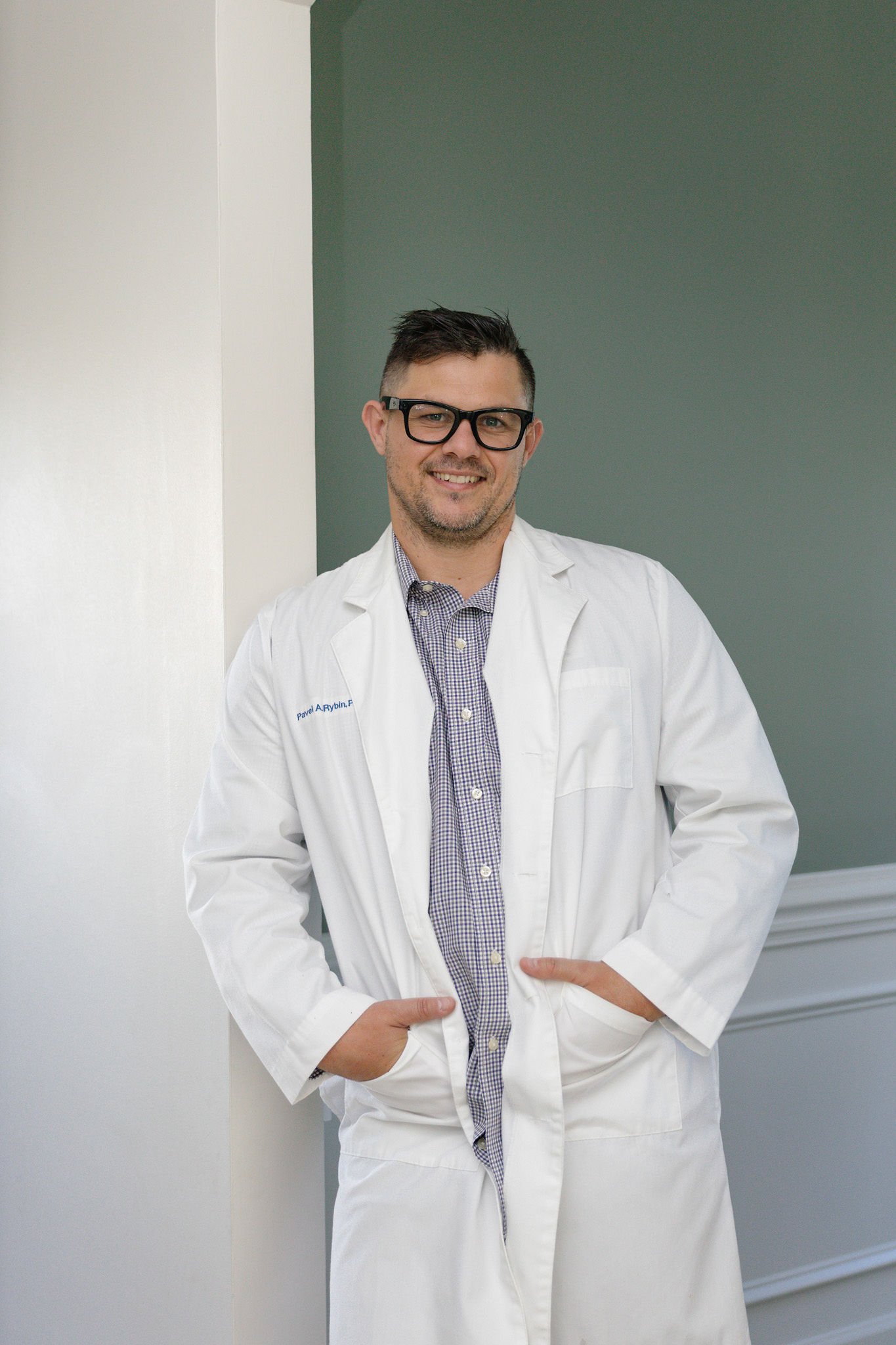
None of Your EARSwax is a dedicated ear clinic at Daetwyler Plaza, 13420 Reese Blvd W Suite 22, Huntersville NC 28078. Earwax removal is performed by Pavel Rybin PA-C, who is nationally certified through the NCCPA and has over five years of ear, nose, throat, and head and neck oncology experience.
The clinic uses microsuction ear cleaning. This means wax is removed under a binocular microscope while the ear canal and eardrum stay visible the entire time. The method uses no water, no flushing, and no pressure.
That matters because visibility changes the process. Instead of rinsing blindly or pushing into the canal, Pavel Rybin PA-C can see the canal wall, the wax, and the eardrum while working. Microsuction may be used for wax that is dry, sticky, deep, or difficult to reach.
This is different from home irrigation. It does not rely on water pressure to move wax. It is also different from trying to scoop wax at home without a medical view of the canal.
Clinic details are straightforward:
Service or policy | Details |
Earwax removal | $135 in clinic |
Ear and ENT evaluation | $180 in clinic |
Foreign Body Removal | $200 in clinic |
Payment | Cash pay |
HSA and FSA | Accepted |
Insurance | Not accepted |
Referral | Not needed |
Patients under 18 | Parent or guardian required |
Walk ins | Based on availability |
Hours | Monday-Friday, 8 AM to 5 PM |
Saturdays | Occasional announced Saturday mornings |
Ear cleaning in Huntersville NC starts here with a direct exam rather than a guess. If drops, swabs, candles, or kits have not helped, more attempts at home are not likely to make the ear safer.
Frequently asked questions
Should ears be cleaned every week?
Most people do not need weekly ear canal cleaning. The outer ear can be washed during normal bathing. The canal usually moves wax outward on its own.
Are cotton swabs safe if they do not hurt?
Pain is not the only sign of a problem. Cotton swabs can still push wax deeper and pack it near the eardrum, even when they do not hurt.
Do ear drops remove wax by themselves?
Drops can soften wax. They do not pull wax out. If the wax is hard, deep, or packed in place, drops may not clear the blockage.
Who should avoid irrigation kits?
Anyone with ear tubes, a perforated eardrum, or prior ear surgery should not irrigate or use drops unless a clinician has cleared it first.
When should wax be checked by a professional?
Wax should be checked when muffled hearing on one side, fullness that does not clear, ringing, pain, drainage, or dizziness occurs, or when home care has not helped.

The safest ear cleaning plan is also the simplest. Clean the outside. Do not put tools into the canal. Skip ear candles. Use drops or irrigation only when appropriate and only when there is no history that makes them unsafe.
If symptoms do not clear, stop home care and get the ear looked at.
This is educational information and not medical advice.


